Kitchen Cabinet Sizes: Tips, Tricks & Measurements Made Easy
Table of Contents
Are you considering a kitchen renovation or a new installation? Determining the appropriate sizes for the cabinets is one of the most daunting and crucial challenges. From base to wall to tall pantry cabinets, each type of cabinet has its specific dimensions. Whether the kitchen is small or big, having to ‘fix’ incorrectly sized cabinets after installation leads to gaps forming, wasted spaces, or worse, its functionality. To help maintain a compact kitchen or even a more spacious one, choosing the appropriate sizes ensures maintained workflows and a well-kept appearance.
This guide discusses kitchen cabinet sizes to ensure maximum efficiency aligns with excellent style for your kitchen.
Why is the Cabinet Size so Important?
From aesthetics to ergonomics, kitchen use efficiency is affected by the design and layout of the cabinets. The negative impacts of poorly determined cabinet sizes include:
- Wasted space
- Gaps between cabinets
- Poor organizational practices
- Appliance overlap
But when is the size proportionality correct? The kitchen in your home seems orderly, fully functional, and feels right.
The 3 Main Types of Kitchen Cabinets
There are three main types of kitchen cabinets. Each has a distinct function and varying standard cabinet sizes.
1. Base Cabinets (Lower Cabinets)
This is the first layer of your kitchen. They are on the floor and hold the countertop. In these, you will keep heavy items such as food, cooking containers, and some kitchen machines.
- Height: The height of base cabinet sizes should be 34.5 inches (without countertop), 36 inches total when a countertop is added.
- Depth: 24 inches, but may go up to 30 inches for deeper storage.
- Width: 9 to 48 inches, but common in 3-inch increments.
Tip: A common practice is to place a 36-inch-wide cabinet over a kitchen sink.
2. Wall Cabinets (Upper Cabinets)
Used for placing everyday plates, glasses, and pantry items above the counter, hence they are called upper cupboards.
- Heights: 12″, 15″, 18″, 24″, 30″, 36″, 42″.
- Depth: 12″ can go up to 24” when placed above the fridge.
- Widths: 9″ to 48″.
For your kitchen with an 8-foot ceiling, 30 or 36-inch cabinets would best fit. Or if you prefer a taller cabinet, then 42-inch models would be the best choice.
3. Tall Cabinets (Pantry Cabinets)
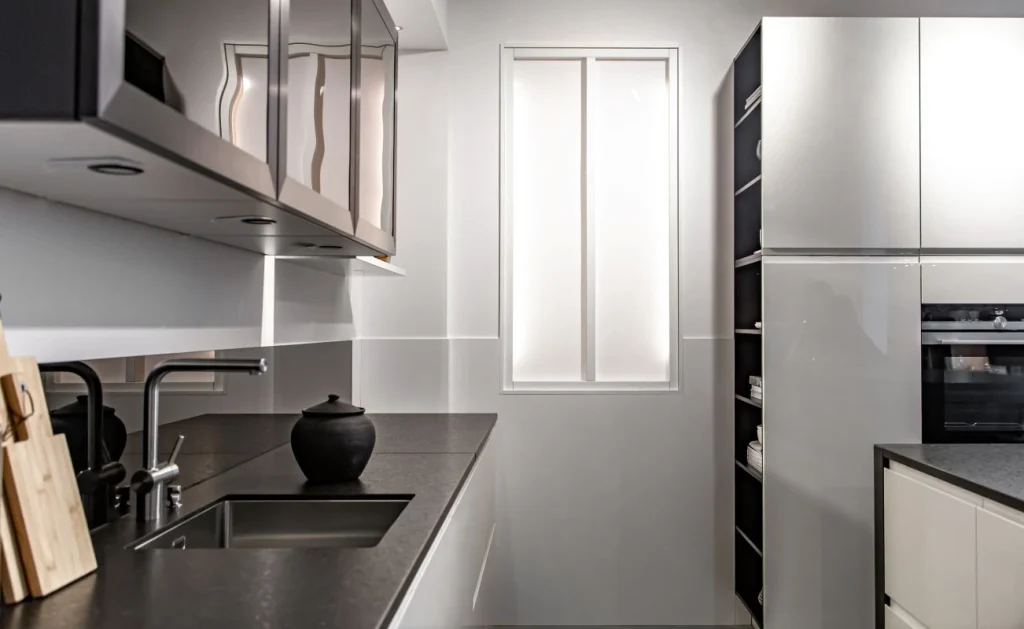
Standing from floor to ceiling, a tall cabinet for the kitchen is useful for storing large items. Often, they are used as a pantry or cleaning supply storage.
- Height Variations: 84”, 90”, 96”
- Depth: 12” to 24”
- Width: 18”, 24”, or 30”
These items are best for storing food and other items not used daily.
Custom Kitchen Cabinet Sizes for Specific Locations
Certain regions of the kitchen have specific measurements for the cabinets:
- Corner base cabinets: 36” x 36” (L-Shaped)
- Sink base cabinets with no drawers: 30”, 33”, or 36” wide
- Cabinets placed over the fridge: measuring 12-15” H, 24” D, 30-36” W
Tips: Double-check the dimensions of appliances for accurate cabinet sizing.
Custom, Semi-Custom, or Stock Cabinets: Which One Should You Choose First?
While looking for new kitchen cabinets, three options stand out:
Stock Cabinets
- Pre-fabricated in specific dimensions
- Easily accessible and low in price
- Limited variety in design
Semi-Custom Cabinets
- Have a base dimension, with features that can be designed to customer needs
- Price in the middle range
- Very good for mid-level alterations like additional shelving or different styles of doors
Custom Cabinets
- Designed specifically to fit your kitchen
- Costly, but ideal for luxury kitchens or strange layouts
- Design without restrictions
Tip: If you have an unconventional-shaped kitchen or uneven walls, custom cabinets designed for those features will make the extra cost worthwhile.
Key points to consider
Even the tiny details in a cabinet’s configuration count. Let’s talk about two features that are usually ignored:
Toe Kicks
It enables standing without discomfort for base cabinets.
- Height: Generally, 3–4 inches
- Depth: Roughly 3 inches
Spacers and Fillers
Fillers close the space between two adjacent cabinets or between a cabinet and a wall while maintaining the ability for doors or drawers to swing open without contact.
- Width: 1-6 inches
Useful Tip: Do not skip adding fillers as part of your kitchen design. You may end up needing them to get out of tight spaces and challenging installation issues.
Wrap Up: Understanding Kitchen Cabinet Sizes Does Not Have To Be Overwhelming
Understanding the basics of kitchen cabinet sizes doesn’t have to be overwhelming. You’re right if you think there is an accepted height and width for base, wall, and tall cabinets. That’s a great starting point to determine your storage, style, and space requirements. Be it stock, semi-custom, or fully custom, the primary objective is to achieve a kitchen that is visually appealing but operationally superb. Remember that every detail matters, especially comfort and finish.
Why Choose BathsKitchen to Customize Kitchen Cabinets
At BathsKitchen, custom kitchen cabinets are crafted with precision, quality, and your unique space in mind. Whether you’re renovating a small kitchen or building a grand layout, our experts help you choose the right sizes, styles, and finishes for a perfect fit. Enjoy professional service, tailored solutions, and beautiful designs that bring functionality and elegance together.
Frequently Asked Questions
Yes, definitely. Size mixing enhances personalization and layout functionality, as well as adding a designer feel to the kitchen.
Choose 36” or 42” tall cabinets. 42” works well if you want the cabinetry to go all the way up. Choose 36” for a more open feel with crown molding finishes.
Yes, especially for clients with unconventional kitchens or those with very specific stylistic requests. Custom cabinets are advantageous in small or oddly shaped rooms.